29 September 2025
Loading



Velmor Teknoloji
07 October 2025
In the rapidly evolving world of technology, the Internet of Things (IoT) and automation systems have become the driving forces behind digital transformation. Through sensors, intelligent devices, and real-time data processing technologies, the physical and digital worlds have merged into a unified ecosystem. This integration is not limited to manufacturing — it is revolutionizing energy management, transportation, healthcare, agriculture, and smart cities alike.
The primary goal of IoT is to transform objects from passive data collectors into active systems that can interpret information and make autonomous decisions. Machines, devices, and infrastructure components are now capable of communicating with each other, responding to environmental changes, and optimizing their operations. Automation, on the other hand, turns this intelligence into measurable business value — enabling production lines, energy systems, and service operations to function efficiently with minimal human intervention.
IoT systems are generally built on three core layers: sensing, networking, and application. Sensors detect environmental variables such as temperature, pressure, humidity, vibration, or energy flow. The data is then transmitted through networks to cloud servers or local gateways, where it is analyzed using advanced algorithms. The insights produced guide automation systems that execute necessary actions automatically.
For example, in a production facility, vibration sensors can detect when a motor is overloaded. The system immediately reduces speed or triggers a maintenance alert. This not only increases efficiency but also enhances predictive maintenance capabilities — reducing unplanned downtime and operational risk.
While industrial automation has existed for decades, IoT has transformed it into a data-driven, flexible, and predictive discipline. As a cornerstone of Industry 4.0, this integration is creating truly smart factories.
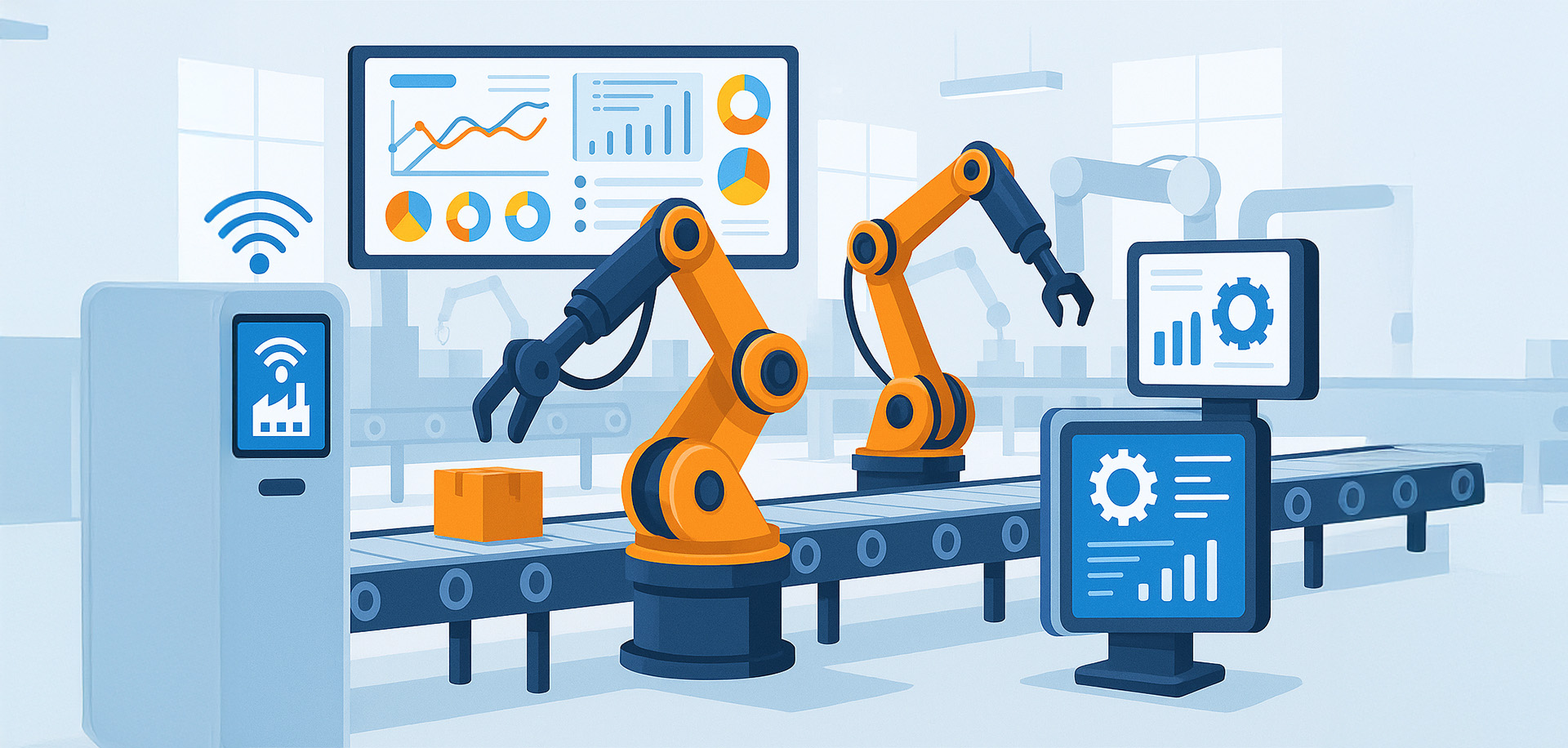
Imagine a factory where robotic arms communicate wirelessly, sensors monitor every machine in real time, and managers oversee production remotely through cloud-based dashboards. IoT-driven automation continuously analyzes workflows, optimizes energy consumption, predicts failures, and adjusts logistics flows based on live data.
The result is not only cost reduction but also increased adaptability and sustainability. As human dependency decreases, error rates drop while production quality and consistency rise. Meanwhile, energy consumption, waste, and carbon emissions are significantly reduced, making IoT automation an essential tool for green manufacturing.
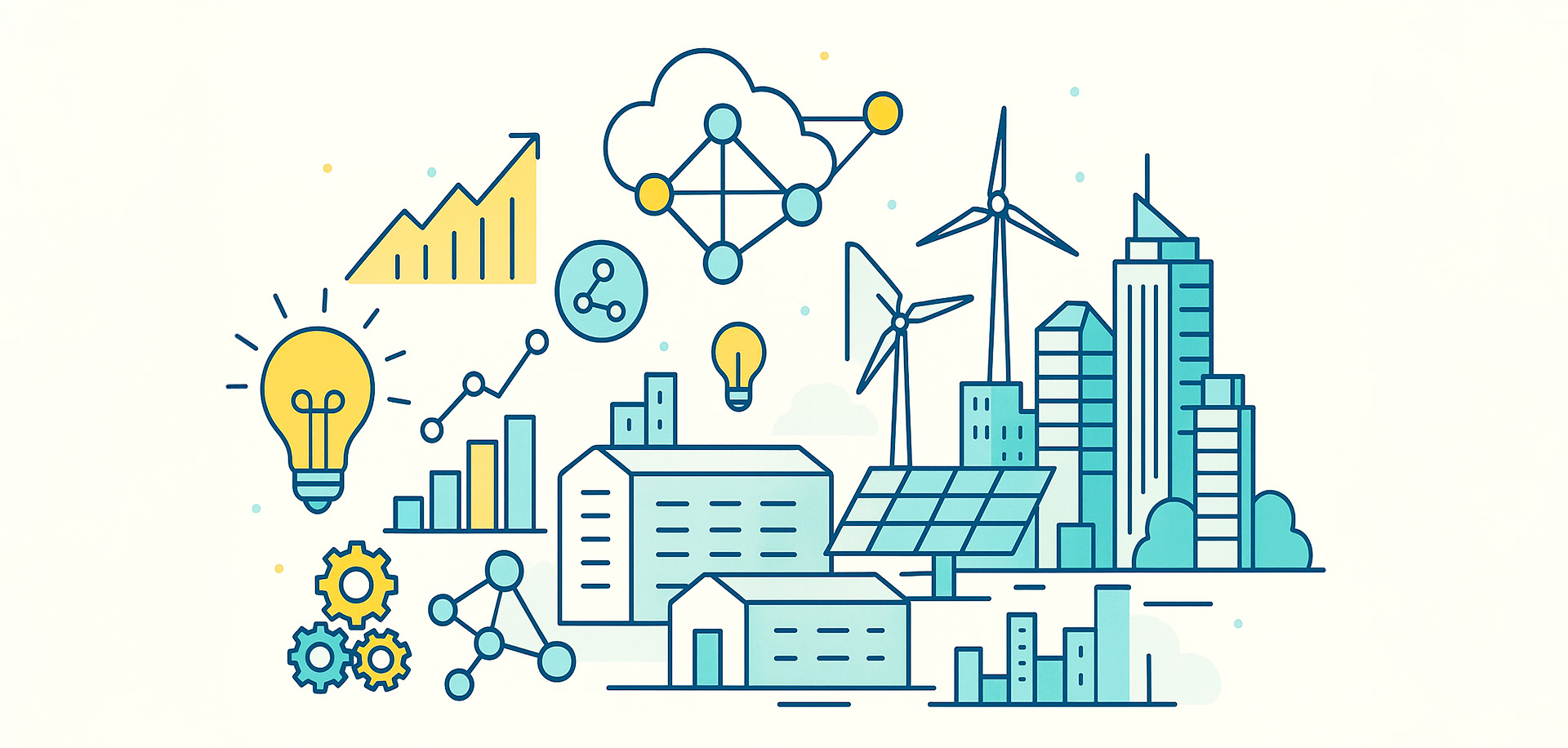
In the energy sector, IoT brings transparency and control to both production and consumption. Smart meters track real-time usage and provide feedback to users, allowing both individuals and businesses to optimize their energy patterns.
Smart grids dynamically monitor electricity flows, balancing supply and demand in real time. When renewable sources such as solar and wind are integrated, IoT sensors measure generation capacity and automatically redirect excess energy to storage systems. This enhances grid efficiency and reduces carbon footprints.
Critical infrastructure such as power plants, substations, and transmission lines are continuously monitored through IoT-enabled sensors. This enables early fault detection and predictive maintenance scheduling, which increases reliability and reduces costs.
IoT’s transformative impact is clearly visible in smart cities. Imagine traffic lights that adapt to real-time congestion, waste bins that signal when full, and streetlights that adjust brightness based on daylight and movement.
These interconnected systems improve operational efficiency, reduce public spending, and enhance citizens’ quality of life. Smart transportation networks can predict and reroute traffic to prevent congestion, while intelligent parking systems guide drivers to available spaces. Smart energy grids automatically adjust public lighting and HVAC systems, minimizing unnecessary consumption.
In this environment, city management becomes proactive rather than reactive. By using real-time analytics, municipalities can identify issues before they escalate and plan sustainable urban strategies.
Agriculture has also been deeply transformed by IoT technologies. Smart irrigation systems monitor soil moisture and weather conditions, applying precise water amounts only when necessary, thus improving yield and conserving water.
Meanwhile, drones and field sensors enable farmers to automate fertilization, pesticide spraying, and harvesting operations. In livestock farming, IoT devices track animal health and activity levels, creating early-warning systems that prevent disease outbreaks.
Automation in agriculture not only reduces labor costs but also supports resilient production models that can adapt to climate change and global food demand.
As IoT networks expand exponentially, they introduce new cybersecurity risks. Each device represents a potential entry point for attackers, making system-wide protection a critical priority.
Security must be implemented end-to-end, from device firmware to cloud infrastructure. Encryption, identity verification, and continuous software updates form the foundation of IoT protection. Moreover, Zero Trust Architecture, which validates every access attempt, helps safeguard system integrity.
Proper data governance is equally essential. IoT systems handle both operational and personal data, which means compliance with privacy regulations and ethical standards is a must. Building trust in IoT requires not just technological excellence, but also responsible data stewardship.
The true power of IoT lies in the data it generates — and how that data is interpreted. Artificial intelligence (AI) and machine learning (ML) algorithms transform raw data into actionable insights.
With these tools, IoT systems move beyond monitoring to forecasting and decision-making. For instance, by analyzing historical failure data, AI can predict when a component is likely to malfunction. In logistics, AI models can optimize delivery routes using live traffic and weather data. In energy systems, consumption patterns can be analyzed for dynamic pricing and load balancing.
This predictive intelligence turns IoT from a passive observer into a strategic decision-support system, enabling organizations to act before problems occur.
While much IoT data is processed in the cloud, certain scenarios demand local computation for real-time responsiveness. This is where Edge Computing becomes crucial.
Edge devices analyze data near its source — whether in a factory machine, a vehicle, or a power converter — minimizing latency and network dependency. In contexts like autonomous driving or robotic manufacturing, where decisions must be made in milliseconds, edge processing ensures safety and continuity.
A hybrid cloud-edge architecture combines the scalability of the cloud with the immediacy of edge computing, providing the best of both worlds: speed, resilience, and security.
The number of connected devices is expected to surpass tens of billions within the next decade. With the global rollout of 5G networks, communication between devices will become faster, more reliable, and more energy-efficient.
Simultaneously, the convergence of IoT with AI-driven micro-automation will allow businesses to build self-optimizing systems capable of learning and adapting autonomously.
In the near future, not only machines but humans will become part of the IoT ecosystem. Wearable devices, biometric sensors, and augmented reality systems will merge physical and digital experiences in workplaces, healthcare, and education.
At this intersection, the values of efficiency, sustainability, and human-centric design will define success. IoT and automation are not simply technological trends — they represent a new way of structuring societies and economies.
The Internet of Things and automation systems have become the digital backbone of the modern world. These technologies extend far beyond manufacturing — they redefine how we produce energy, grow food, transport goods, and manage cities.
Each sector that integrates IoT becomes more efficient, safer, and more sustainable. Yet success in this transformation depends not only on adopting smart devices, but also on implementing secure architectures, robust analytics, and ethical data management.
For technology leaders such as Velmor, IoT and automation are not the future — they are the foundation of today’s intelligent world. With connected systems, integrated infrastructures, and predictive intelligence, organizations can achieve long-term growth, operational excellence, and a competitive edge in the era of digital evolution.