29 September 2025
Loading



Velmor Teknoloji
27 September 2025
The Internet of Things (IoT) and automation are among the most powerful driving forces of digital transformation. An ecosystem in which billions of devices communicate with each other, data from sensors is processed in real time and decisions are automated by smart algorithms has already become a reality of today rather than just a vision of the future. These technologies are transforming not only production processes but also our lifestyles, cities and business models at their core.
IoT provides visibility, traceability and control by connecting physical objects to digital networks. Applications such as home automation, wearable health devices, smart meters and industrial sensors enhance both user comfort and efficiency. For example, a farm can automatically operate its irrigation systems based on soil moisture data from sensors; this saves water while increasing crop yield. Similarly, in city infrastructures, traffic lights and public transport systems are optimized with IoT data to reduce both fuel consumption and time loss.
Moving to a new topic:
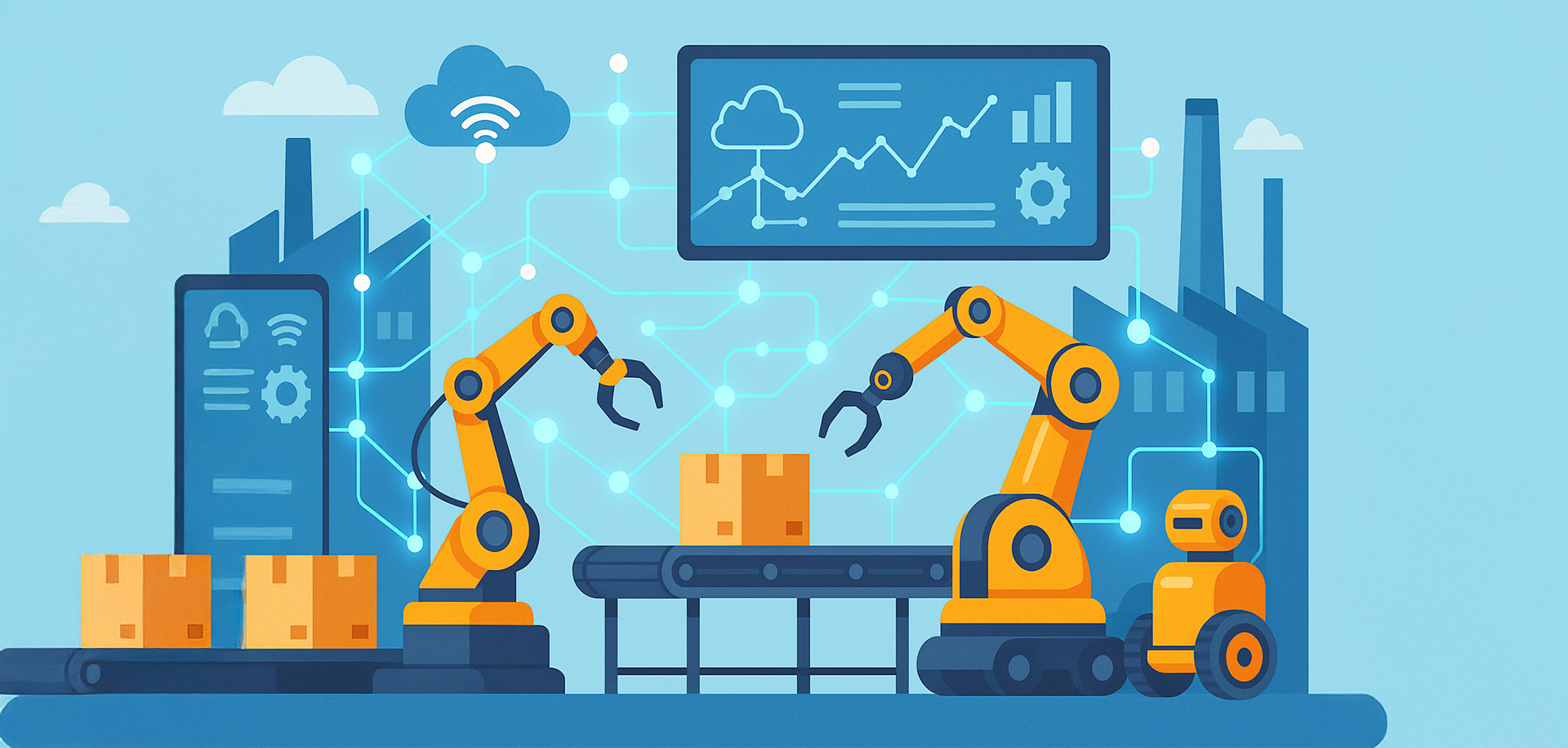
Automation becomes much more powerful when it is fed by data collected from IoT. Robotic systems, AI-supported decision mechanisms and cloud-based control platforms minimize human intervention, speeding up processes and reducing errors. Automatic monitoring of production lines in factories, warehouse management in logistics and medication dosing systems in the health sector are practical examples of this integration. In this way businesses reduce costs while improving quality and enabling employees to focus on more creative and strategic tasks.
One of the most striking impacts of IoT and automation is the strengthening of a data-driven decision-making culture. Sensors and connected devices continuously produce data; this data is analyzed by artificial intelligence and machine learning algorithms to reveal predictions, anomalies and opportunities. In this way companies can plan maintenance in advance, detect bottlenecks in their supply chain early and adapt quickly to customer demands. This proactive and flexible approach consolidates competitive advantage.
Moving to a new topic:
Alongside its benefits IoT and automation also bring risks. As the number of connected devices increases the surface area of security vulnerabilities expands. Cyberattacks not only steal data but can also harm critical infrastructures. Therefore security protocols, authentication mechanisms and encryption standards must be integral parts of this ecosystem. At the same time principles of data privacy and ethical use must be clearly defined; otherwise user trust will be damaged and the adoption of technology will slow down.
The human factor also plays an important role in this transformation. IoT and automation transform employee competencies; as repetitive tasks are taken over by machines, people focus more on supervision, analysis and creative problems. Training and reskilling programs play a critical role in this process. In addition bringing together experts from different disciplines makes it easier to produce comprehensive solutions that have both technical and social dimensions.
Moving to a new topic:
From a sustainability perspective IoT and automation offer significant opportunities. Optimizing energy consumption, improving waste management and making resource usage traceable are possible thanks to these technologies. Smart energy grids integrate renewable energy sources more efficiently, while automated systems help reduce the carbon footprint. This provides environmental benefits as well as long-term cost advantages.
Ethical and legal frameworks guide the development of these technologies. Issues such as data ownership, algorithmic transparency and accountability of automated decisions should be among the priorities of both regulators and companies. Otherwise while technology progresses social acceptance may lag and potential benefits remain limited.
In conclusion IoT and automation have a transformative impact across industries. When supported by proper planning, security, training and ethical principles, these technologies not only increase efficiency but also help us build a more sustainable, secure and smart future. This journey requires vision, collaboration and continuous learning; but for those who move forward with the right strategies it offers limitless opportunities.