29 September 2025
Loading



Velmor Teknoloji
01 October 2025
Each industrial revolution has created deep changes in production and ways of working. After steam power, electricity and computerization, we are now in the era of Industry 4.0, and one of its most important components is Industrial IoT (IIoT) together with smart automation systems. These two technologies work in tandem to transform everything from production lines to logistics networks, from energy management to maintenance processes.
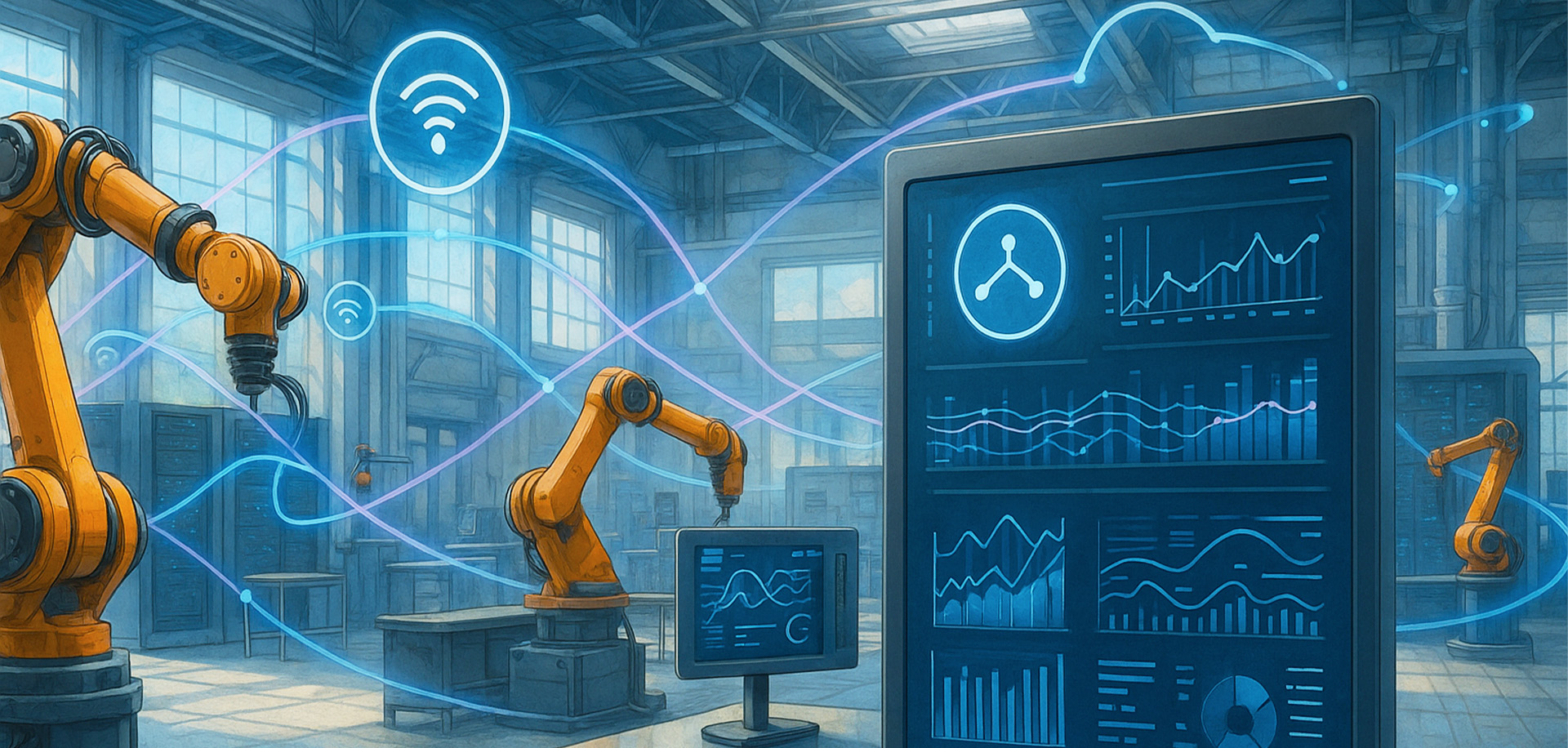
Industrial IoT collects real time data from machines, sensors and devices in the field, giving businesses a deep visualization of their operations. This data is gathered on cloud based platforms and processed with analytics tools and artificial intelligence algorithms. Decision making is supported by data, failures are predicted in advance, resource use is optimized and efficiency increases. This approach allows companies not only to view past performance but also to anticipate future trends and develop proactive strategies.
Moving to a new topic:
Smart automation uses this data to make operations automatic and flexible. Robotic arms, automated guided vehicles (AGVs), digital twin technologies and software robots can run processes without human intervention. For example in an automotive plant robots assemble parts on the production line while IIoT sensors monitor equipment performance and report early signs of failure. Production continues without interruption, defect rates drop and maintenance costs decrease.
One of the greatest benefits of Industrial IoT and smart automation is flexibility. While traditional production lines are fixed and resistant to change, smart factories equipped with these technologies can quickly adapt to fluctuations in demand. Production plans can be changed in real time, resource allocation can be made dynamically and personalized products can be manufactured at mass scale. This is a major advantage in today’s world where customer expectations and markets change rapidly.
Moving to a new topic:
In the field of energy and sustainability IIoT and smart automation also play an important role. Sensor equipped energy systems reveal inefficiencies by monitoring consumption and automation systems optimize energy use. For example an energy management system in an industrial plant can forecast demand peaks, balance loads and reduce the carbon footprint. This lowers costs while helping to meet environmental targets.
Security and data privacy are critical elements of this transformation. In a network of millions of connected devices cybersecurity measures are vital. Encryption, identity and access management, network segmentation and regular security testing are fundamental security layers of IIoT infrastructure. Training employees in cybersecurity and ensuring processes are auditable also reduces risks.
Moving to a new topic:
IIoT and smart automation require not only technological but also cultural transformation. Employees must be retrained to adapt to new technologies and business processes must be redesigned for digitalization. Managers should encourage data driven decision making and create trust within the organization by sharing success stories. This makes transformation a process owned by all employees, not just top management.
The future of these technologies is even more exciting. AI powered predictive maintenance systems, autonomous production lines, ultra low latency 5G communication networks and blockchain based supply chain tracking solutions will take IIoT and smart automation to a new level. These developments will not only increase efficiency but also enhance innovation capacity, giving companies a global competitive advantage.
In conclusion Industrial IoT and smart automation transform business operations, making them more flexible, efficient and sustainable. When supported by the right strategy, secure infrastructure and a human centered approach, these technologies have the potential to reshape not only production processes but the entire value chain. Thus digitalization turns from a cost into a long term competitive advantage.